Monday, December 22, 2014

"SmartVan" Business Proposal (Draft 1)

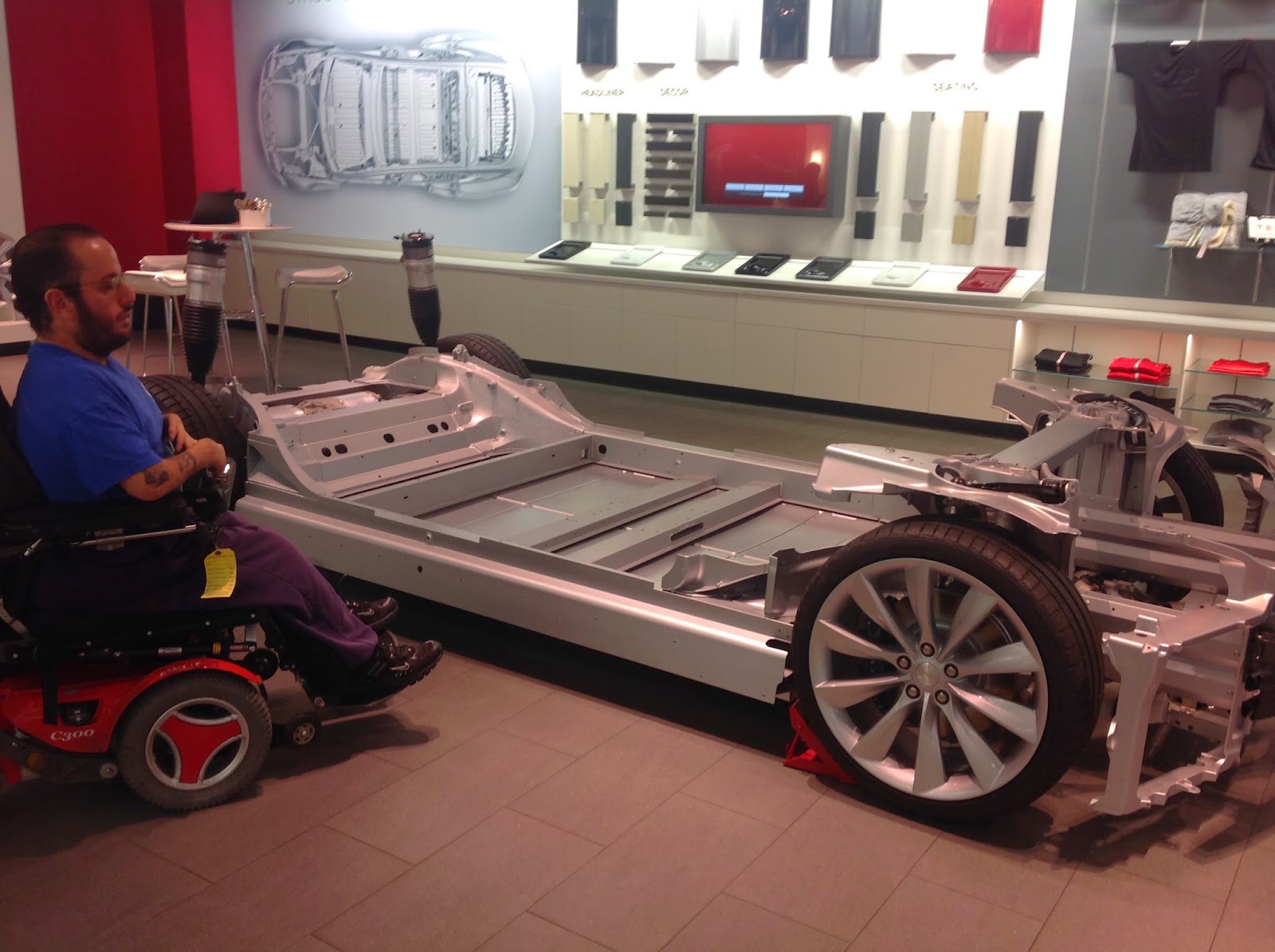
Tesla's intuitive chassis allows for optimum power transfer and various accessory hookups


Abstract:
We need to stop kidding ourselves; if something is not done to revolutionize mass transit as we know it, then mass transit, "as we know it," will continue to be just that. The technology is there. Not only is the technology there, but the systems are already in place. The problem is not with the system itself, but with us; we simply haven't been doing "it" the right way.

So what is the right way? Well...to begin with, we have to build a paratransit network that's intuitive. This is not only true of the public transportation scene, but of the automotive industry as a whole. Face it: vehicles are becoming more and more human by the decade, they're becoming "smart."

For this reason, the SmartVan, paratransit platform seeks to become everyone's new solution to the common dial-a-ride. Our more conventional systems have served their purposes, but then our world is changing, and so are we!


Web app development will allow us to create a smart interface from which ride reservations can be booked in realtime

Proposed "smart lanes" would allow for integrated freeway corridors exclusive to the SmartVan fleet


Step-in entry on the Model X makes for wheelchair and ambulatory access


The J-Series joystick from EMC adaptive driving, like the one that could be used to manually propel a Model X


Tesla's all-electric, "Model X" crossover features falcon wing doors with step-in entry. We're thinking that features like these, along with others, will make for a more ADA (American With Disabilities Act)-compliant platform


Saturday, December 20, 2014

Dialing-In The "SmartVan" Platform: What Are The Pros And Cons?


As Los Angeles' Metro Transit Authorities and other outlets begin to experiment with clean vehicles, it becomes increasingly obvious, so it seems to many of us, that things are going in the right direction...but it's still not being done in the right way. Why does MTA persist in spending money on "TAP" cards and increased security, when clearly, tax dollars need to start getting spent on improving the actual mass transit grid?


This is not only applicable to LA's bus and rail, but to their dial-a-ride, a system that our city did not even have in place for the disabled community till around 1994. But this touches on an issue much greater than ourselves, who we are as a solidified community; it's not a "disabled" issue. Building a fleet or network of intuitive transit vans is really a necessity at this point, since the whole picture of transport is gravitating that way anyway.

Face it: people just can't drive anymore. It's not a question of "if," but "when" the whole thing is going to fall apart, so developing an intuitive network of paratransit vehicles only makes sense. It doesn't matter how you use the internet; if you have some sort of access to it, then you're probably going to pay for it.


The J-Series console from EMC features left-to-right steering, along with gas and brake functions.

Since we're paying out-of-pocket for a public resource that really should be tax-funded...you know, since it is public, then it goes without saying that that resource should start getting used in a way that benefits everyone, equally across the board. Capitalism simply does not work; we can fight with and scream at each other all day long, and that language is simply not going to translate. We have to look at it for what it is: Capitalism is kind of a good idea, it's well-intentioned. It's "well-intentioned" because it seeks to reward those who work hard, but then it's flawed in that every business becomes a copycat; entities are forced to keep-up with whatever behavioral norm is established by the mechanism in-place at that time.


But we do first have to sort of sympathize with the business owners, because they really are just as victimized as we are as consumers. Truth be told, professional entities just have to save money. This means that paratransit outlets like Access and MTA can't really afford to even invest in the idea of developing smart vehicles for their fleets. How could we possibly ask these outlets to invest their money, their time into a more intuitive platform, when the cold truth is that these companies can barely afford to pay their own employees? That's exactly the problem, right there!

That's why we really don't have a choice but to follow Elon Musk's model of business...his model for money-making. It's one that defies the laws of corporatization, because it's one that says, "Sharing is caring." It may not be the best mechanism in terms of outright gettin' rich, but that's not really the goal of a platform like SmartVan...or at least it shouldn't be.


The goal has to be product-development, not monopolizing over one corridor of an entire industry. And with all due respect to Detroit, that's just seemed to be their motto from the beginning, the "American" one, which is really nothing more than a platform for the very monopoly of which we speak. That grip, that tight hold is one that needs to be broken now more than ever.

But how do you do that?! Or even better, how do you do that without ruining someone else's business in the process? According to the Capitalists and whoever else works within the corporate sector, it simply can not be done...it just can't. There's absolutely no way, according to the confines of Capitalism, to "share-and-care" without the business platform folding right under.

But then we also have to look back to one of America's most profound money gurus, Grant Cardone. His strategy can be summarized in one sentence: "Change your ask!" What does Cardone mean by this?! Who the hell is this guy, a middle class, Italian-American country boy with a lot of money to tell us to "change our ask?" I mean, what the guy says is complicated, but also true. It's hard for most of us to "change our ask," because the majority of us are limited in our resources.

You just can't get around it: money is the blood that makes pretty much everything circulate. It's sad in a way, because the bureaucracy is forced to do everything in the name of money; how not nice is that?! Not very nice, because if we weren't all so hostage-held by the theoretical "gun" of bureaucracy, GM could build a better-looking car, MTA could develop smart buses for the Los Angeles transport grid, and business as a whole would be run in a far more streamlined fashion.


Is it true that we wouldn't make as much money? To at least a certain degree, it could be true that we're sacrificing a few dollars by converting to a more Socialist business platform. But look...if we keep placing money over intrinsic value, where is our nation going to go, and what will ultimately become of our economy? You'd sit there and complain to me that smarter products cost that much more money. You're damn right it does! How would you expect any business to run without at least a little capital gain?

We ask that question again, because that's important: how can a business run without money? It's fuel, and no race car can realistically run on 87-91 octane. I mean, if you want to try it, you can. But I hope that no one's planning on rebuilding engines anytime soon! It's just a waste of time. If you're going to spend all that money on dial-a-rides and buses, then you might as well spend on something that's intuitive. Even disabled community members have paid taxes at one point or another, but our sidewalks are still way too rough for our power chairs to navigate.


From a projector's standpoint, we're guessing each SmartVan would cost around $200-250k per vehicle. If you read Elon Musk's abstract on the Hyperloop, each vehicle within that system would cost around $250k, the cost of a base-optioned Lamborghini. That means that for the price of an Aventador or less, we could buy SmartVans. Sure, the $250k is the price per unit; we're all well-aware of this. Just do the math, and not the complicated mathematics, but the simple ones; you find that everything boils-down pretty nicely.

The truth is that we don't need to be spending nearly as much money as we think we do; brainwash is a powerful thing, a tool. Who said, necessarily, that a smart vehicle network, a web-based service would have to be expensive to establish? There's not as much truth behind this as we think. Every business had to start somewhere; why not start from the bottom?

Personally, I like being an American, but then I'm boggled by the system of work & transport that the Western world sets in place. It's confusing! Why are we spending more money, at the end of every year, on raw fuel and the vehicles that they animate? Instead of blaming politicians, let's work with them...get them to see things our way. No one is going to get anywhere through brute competition, or at least not at this point in the game.

That's why the purpose behind SmartVan would be to open-source everything that it does, because it doesn't make a lot of money, but it does allow for multiple businesses to successfully share parts, accessories and resources. Not only would a platform like SmartVan be sociable in that way, but it would still generate revenue by allowing everyone to benefit from the invention of one entity, and by making the product or service better, we make our profits better.

There's no way anyone can ever tell me that we're going to lose money by making our products better. It's just stupid to think that we're doing the right thing my making profit into our main priority. It's just not happening! And guess what? As soon as you start building a smart vehicle network, the money-saving component will become inevitable, since fuel and oil are no longer cost-related variables.


That's not the way the system has been treated, but they're going to call us "radicals!" If you can't see that transportation is just like everything else in terms of politics, then I just don't know what to tell you! It sucks! But then bureaucracy often does, so you have to kind of work within it. What a terrible thing to say, though...that we would actually "save" money by using raw fuel and cheaper vehicles/materials!

You see that vision, and if you do, then you see the idea behind SmartVan. It's not really good to envision it as a business or logo; it's a platform, simply put. That means that even if we had to mess with more affordable vehicles, we'll do that. The only place where it becomes problematic is in the production process, because it costs a lot of money to literally build a fleet of Tesla crossovers. Whether in the form of a large storage yard or several small stations, a fleet of vans or crossovers, especially intuitive ones, is not going to cost small money. But at the same time, we can't afford to skimp on costs.


Part of the SmartVan service would be a web app with an easy-to-use interface

So let's get the funding together; let's go straight to the source. If someone like Elon Musk could fund us for a smart vehicle program, then why the heck not?! We have nothing to lose. And that does become the question: would Musk be willing and/or able to throw-down that extra dollar? The one needed to lift an intuitive dial-a-ride off of the ground? I would be scared to even ask! Except that the development of a system like this really has become necessary at this point.

We can't play around! With the way commuters drive nowadays, and just the whole aura of it. Let's face it: you have to go for a market when it's ripe, and either for better or worse, the smart vehicle business is ripe. We need to go with it. How does anyone expect the automotive/transit business to be able to operate without funds? But again, this is what I think would be beautiful about a system like SmartVan. Because it would be a company that would leave all of its inventions as an open source, there would be no room for a monopoly, and so capital gain doesn't even have to come up in conversation, should one ever come up about SmartVan and exactly how it is that the company operates.


So what exactly is the plan? We start by integrating our own services with those of Tesla Motors and EMC, Tesla being the intuitive market's leading automaker, while EMC is one of adapted driving's most ambitious pioneers. The "J-Series," multi-directional joystick console from EMC has within it left-to-right steering functions, along with forward and reverse. For me, and I'm sure a lot of other challenged motoring fans, finding equipment that would actually work was the most difficult part of the journey.


This is where we have to give maximum credit to MobilityWorks of Van Nuys, California. Because of their resourcefulness, I was able to dial-in exactly which console would be the most appropriate for my particular, driving needs. As it would turn-out, the J-Series from EMC was the equipment that fit the best. This is mostly because of its multi-directional nature, and when one really looks at the device from a distance, the J-Series really does bear a remarkable resemblance to those third-party consoles used by such power chair companies as Quickie and Permobil.

What was hard was finding a unit that served the purposes of gas and brake in one, convenient box. That's because most of the systems sold by EMC are manufactured and distributed in individual components, but we're lucky, and it serves for productive equipment testing, that the J-Series exists as  evidence that EMC really is looking out for the interests of the entire community.

But can a piece of equipment as versatile and progressive as EMC's J-Series be integrated into America's first intuitive, SUV platform? There's only one way to find out, and that's by creating SmartVan, developing the platform into Tesla Motors and the world's first ever, fully-automated paratransit service!


Saturday, October 26, 2013

Clash Of The Titans: Could Tesla Motors Be The Future For EnagicUSA?!

My good friend, DaMeaun Carrasquillo and myself recently discovered something that sales guru, Grant Cardone had been trying to tell us all along, that all of us a part of what is referred to as a "chain of command."

It's a proven fact, and ironically enough it was at our favorite pizza/entertainment chain where we learned this concept, none other than Chuck E. Cheese's. What Chuck E. Cheese and CEC Entertainment ultimately taught us is that big business--or any kind of business--is something that's accomplished through a simple chain of command and/or action.

Kangen water systems also became part of the CEC chain of command by delivering free gallons of ionized water to the chain's Northridge, California location. Historically one of the original CECs to be opened in 1982, Northridge was at one time home to one of the San Fernando Valley's most beloved "Pizza Time Theaters," back when PTT was a reality for the Chuck E. Cheese chain.

In 2013, however, we've realized that we have to abandon the past in pursuit of the future. With this philosophy in mind, Enagic had to find a way to expand upon their wellness business by expanding-upon, or "sneaking their way" into others. Upon careful investigation and firsthand experience, we found that Tesla Motors was that company.

Grant Cardone, who quickly became one of my cultural icons, taught that using what he calls the "10X Factor" is indeed the best plan of action for the business realm. In that spirit, I wrote this blog within a 20-25 minute window, but it was also in that spirit that I came to an epiphany: EnagicUSA has no option at this point but to become an Elon Musk company.

For no other reason should this be, except that Tesla is a "wellness" business first and a car builder second. Education is the key when it comes to Tesla, and the idea of hydroelectric bettering is one that Tesla and Enagic have in common.

The strategy pyramid, for me anyway, is that Tesla is at the top, Belgian fry outlet, Frytes comes second, as they are a restaurant concerned with better living through better food, and CEC Entertainment comes third, as Chuck E. Cheese's has proven to be a corporate pod concerned primarily with profit since at least 2012.

The vision then, is to make Tesla a place that practices better health through better method. How else, but by getting kangen water machines into the Tesla showrooms, the closest in this case being at the Westfield mall in Canoga Park. Tesla's Topanga store is one of the cleanest you could ever visit, and that's why it only makes sense that they make ionized water a major part of their regimen, their "plan of action" from here on.

Japan's Dr. Shinya, and science as a whole has proven that massive health benefits inevitably follow kangen water consumption. Tesla Motors, through their use of a 3-phase electric running gear in the Model S, has likewise shown that using natural methods really just is that much better.

America's current economy is fucked-up. According to Grant Cardone, this is ultimately because the Middle Class is reliant upon the idea of "just enough." When it comes to a possible merger between Enagic and Tesla, however, "just enough" just doesn't seem to be fuckin' enough!


Tuesday, September 17, 2013

Tesla Motors' Answer To The Endurance Circuit: The GT-85 Flagship

The mission:


Let's face it: everyone steals from every one else at one point or another. It's shady, but then haven't friends and loved ones done the same to us at at least some point in our lives and careers?

Take the man Carroll Shelby; he never really "stole" from anyone, per se; it's just that he was the bad-ass, American racer who got fucked-over by GM, and so he decided to become part of the Ford family instead. On a more personal scale, even our lovers and friends who have been involved with the auto industry have blind-sided us to a degree; why shouldn't General Motors do the same thing in the 1980s with the Buick Grand National, then again in the '90s with the Saturn EV1?! It makes dollars and it makes sense, which in turn makes more dollars.
So what to do now in a world where Tesla is becoming the EV market's standard, and public charging stations are nearly everywhere? That solution is a simple one: take a pre-existing flagship and retrofit it. Bruce McLaren sure did build a bad car in the '60s with the M8; with the "Tesla touch" being added to that very platform, that mother fucker sure would be a thing of fear at LeMans or "the Ring!"

In that "bad boy" spirit of car-building, this proposal introduces a new flagship vehicle to the Tesla lineup; that vehicle is the proposed Tesla "GT-85."


 Specs and performance:

0-60: 3.5 seconds (est.)
Top speed: 285 mph (est.)

1/4 mile: 11.3 @ 135 mph (est.)

Platform: McLaren M8 kit car

Drivetrain: Tesla Model S P85 DC-linear with an onboard lithium battery

Range: 235-300 miles at full charge

Estimated price: $150,000 (est.)

Projected availability: Between 2015-16


Tuesday, September 10, 2013

Kangen Water And The Model S: Building A Grid Geared Toward Wellness


Today at the gym, I had been speaking with a woman named Pat, who, like myself, is a workout regular. Truth be known, I enjoy talking with people like Pat; the majority of people are non-receptive when it comes to adapting new ideas and philosophies. But not Pat; she's among the few and the proud.

A conversation that usually comes-up between us during our workout sessions is Tesla Motors, and that conversation naturally leads to one of overall wellness and economics. Truth be known, the dialogue regarding Tesla and Elon Musk is not one that revolves as much around cars and trains as it does common sense and practicality.


In this instance, if we were to conjure a diagram or pyramid, the schematic is one that would outline three things all together: Solar power, electric transportation and now, a third element, kangen water.

You see, it's not a thing of selling people on cars, solar panels or drinking water. All of these things work together to form one, solid system, and it's a system that seeks to rebel against everything we've ever known since the very beginnings of the Industrial Era. Here's how it boils-down: you drink better water and follow the rules of proper nutrition, and by doing this you better yourself as an individual.

We'll take this model of thought even a step further: by drinking good water and following a suitable diet, you are better and therefore feel better. By feeling better, you think better, and this is the selling point, because by using your mindpower to its fullest, you're able to engage in other activities that lead to smart moves.

"Smart moves" are the ones that lead you to spend money on smart purchases, like Tesla vehicles. By thinking clearly and therefore buying a smarter vehicle, you have not only refreshed your very thought process, but you've essentially overhauled it in a way that has driven you to buy an "appliance" that can help to make your overall existence that much easier. In regards to solar power, that's just another appliance that can help to contribute to your overall well-being.


But this is also where the discussion of water comes in, because the water that you drink will inevitably have an impact on the quality of your overall existence and function. This is because more than 80% of our bodies consist of water, but as has happened within the automotive industry, there has been a myth or series of myths that have been embraced and pushed-forward.

Think about it: why have we been using fossil fuels in any contemporary mode of transportation? Oh, I know what most people would say: "it's a tradition," it's just the way things are. Back in Nazi Germany, people held the same overall attitude about Hitler's reign over that nation: "This guy knows what he's doing, and this is just the way it has to be." That model of thought seemed to work until it was too late, and by that point, the consequences were catastrophic.

America's not too far from Germany, believe me; if we're willing to accept one, then why wouldn't we accept the other?! Oh yes, the reign of terror and the system of propaganda that was Nazi Germany extends itself to the United States today. Why do we use gas and oil in our cars? Because it puts money in someone else's pocket. And why do we drink bottled water? For the same reason!


In Osaka and elsewhere in Japan, however, there is an alternative method to everyday living that seems to make the most sense. "Kangen" is a Japanese phrase that means, "return to origin." That's what their drinking water does; it returns us to our origins. When a fetus is inside its mother's womb, it develops within an alkaline-based environment. This is why babies are born with such soft skin, and scientifically-speaking, cancer can not exist within an alkaline setting.

But guess what kind of water the Japanese drink on a normal, if not everyday basis? That which is alkalized, and that's exactly what kangen water is. With kangen water, electromagnetic currents are used to purify and alkalize drinking water, and one of the ways that the process achieves these results is by making water molecularly-smaller than most. This means that it gets into one's vascular system, and it's in that fact where the water's healing properties lie.

Cancer and other disorders have been said to have been cured through kangen consumption over extended periods of time. Is this to say that the water itself is a cure-all? Certainly not, but then there are some health-related challenges that its consumption can help to alleviate.

My personal testimony of kangen water is that it's helped me to be energetic, strong and focused. It's boosted my overall creativity and ability to read and write. Again, this doesn't mean that it's been a cure-all, but it certainly has helped with what I consider to be among my most common obstacles.

What does this have to do with Tesla, or even the notion of making solar power a part of our grid? Just remember that pyramid we drew-up earlier and it makes sense all over again. Water is a part of wellness, but so are electric vehicles; as we start to use these things in conjunction with each other, we start to see the bigger picture.

Again, think about it: What is the portrait of a "perfect" home or facility? It's one that uses kangen for its primary water, solar as its primary source of power and has an EV parked out front or in the garage. That's not to say that mainstream society looks like it will be going in that direction anytime soon, but hey, you can't get mad at the bureaucrats for the things that they simply can not help or control. And I mean, who can blame them?! After all, it seems so much easier to go to church, stick to traditions and hope for the very best; that's the "American way!"


But take the bureaucracy out of the picture, hell, take Congress out of the picture and what can you see? For myself, I have a vision that includes electromagnetic mass transit, DC-powered cars and trucks, nutritional foods that better our health and restore us from the inside and, of course, kangen water that can boost our oxygen intake, while bettering the health of our skin and immune system.

Is it really that simple?! You have to ask yourself, is there anything simple about building an internal-combustion engine with raw fuels and moving parts? Is there anything simple about the fact that McDonald's laces your morning coffee with aspartame? Which one seems like the "simpler solution?!"

The answer is one that's inside of each and every one of us; it's just a matter of searching...


Thursday, September 5, 2013

Amusement Parks Are SOOO Cool: Tesla's "Electric Avenue" Theme Park And Resort


Abstract:


When Walt Disney created Disneyland during the 1950s, there were several styling cues and techniques used to create what would essentially serve as a model. That "model" was to be one of what Disney envisioned as the "perfect city."

Among these "perfect city" cues were the now-famous monorail, which Disney had allegedly proposed to be a public transit possibility for the future. Goodyear Tires' "People Mover" attraction, once up-and-alive in the former "Tomorrowland," also presented a model of what could soon be in the realm of mass transit. Amusement parks are more than places of fun and entertainment; they inspire us, either through steel rollercoasters or audio animatronics.

In that spirit, we present to Elon Musk and Tesla Motors a new and refreshing approach to the whole "theme park" motif. And it's one that uses what I, myself often like to refer to as the "Tesla Touch."

General idea:

Most roller coasters and water rides use traditional wood, steel and tire-based pulley systems to drive what is essentially an archaic system of motor torque and chain drive. The difference with Tesla's "Electric Avenue" theme park and resort is that all attractions, from roller coasters to restaurants, use the same DC and solar technology that has already put Elon Musk, Solar City and Tesla Motors on the map.
Solar Power Brings A New Approach To Dining And Lodging:

Solar power and linear motor technology is not exclusively for Viper and Free Fall; at Electric Avenue, we offer the best in wining and dining, while cooking your food and preparing your drinks in the best kangen water the wellness industry has to offer.

It's the same filtration system that we use to produce alkaline water throughout Electric Avenue's park-wide plumbing network, which means that when you use the restroom at Electric Avenue, the water that comes out of the sinks, as well as toilet and urinal water, is alkaline water that has been processed through a system of electrolysis. That system guarantees that all of the park and resort's water is purified and stays that way.

Solar-Powered Rides And Attractions:

Why use conventional pulleys and chain drives, when flat, DC motors and solar panels do the exact same thing...but better?! The vision behind the Electric Avenue resort is that we build roller coasters with loops, corkscrews and all the other "good stuff," save for the steel that normally beats you up at a Six Flags venue.

Here's how we do it: imagine the most radical steel coaster at Magic Mountain, but constructed using carbon fiber, which is an advanced plastic proven by the automotive industry to be lighter and stronger than steel. In the past, Ferrari and Lamborghini dealers have claimed carbon fiber to be "sketchy" in the sense that it could do anything after long-term exposure to the sun and atmosphere. Part of the vision is to then anodize or blanket roller coaster and water ride tracks with a naturally-based solution that would offer weather protection to the carbon-based tracks.

But why solar and why flat, DC motors? Because Elon Musk has made it clear that flat motors are the ones that will power the capsules inside the Hyperloop, and seriously, have you ever been on Superman?!

DC motors replace traditional drive systems; they're faster and far more efficient. Here, we use electromagnetic poles or markers to drive attraction vehicles, which would also be carbon-based for minimal weight and maximum construction. It's the same technology, save for the flat motor format, that we use in the Model S and other Tesla vehicles. Solar panels are, of course, used to regenerate those motors, driven by the same lithium batteries used by Tesla.

In this spirit, there really is only one question left: Will Tesla's "Electric Avenue" be able to stamp-out the "happiest place on earth" or America's "thrill ride capital?!" Using DC and solar to power not only rides, but animatronics and other attractions, we shall all find out...