Showing posts with label Elon Musk. Show all posts
Friday, June 10, 2016
Tesla Motors: The Future Of Automotive...And How I Hope To Be A Part Of It
Truthfully, I've been a Tesla Motors fan since 2013. But as far as electric cars, that idea would've made sense, to me, as a kid.
You may recall, if you've followed me long enough online, that I got to ride in a Model S. That was via an invite, by Mitch Melassanos from the LA Fashion magazine. That was, for me, a glimpse into the future. But it also made me realize that Tesla is still in need of one more marketing angle: sports cars.
For example, a special edition of the Model 3, with a running gear out of a P90D Model S, would be the Tesla equivalent of a Mercedes sedan with an AMG conversion. Go back to muscle cars: Chevy COPO built 427 Camaros and Chevelles, Mopar does performance accessories for Dodge and Chrysler. The "Special Vehicle Team," or SVT, for the Ford Motor Company.
What should make Tesla any different? Within the walls of that company, there should be a department, or division that specializes in race-and-performance. Again, an "AMG" equivalent for the Tesla make. As a vice president or CEO, that would be the next step-up, in my car company, that I would look into investing in.
But another thing as well, and that's on the subject of sustainability. I am physically-challenged, and yeah...it's obvious that I like cars! But facts are facts: our community, like the rest, needs conveniences like voice activation, auto pilot driving and parking.
That technology would make it possible for the physically-challenged community to drive, but it also happens to be spilling-out to the mainstream. For my community, I need to be able to make Tesla technology available, and besides racing and performance, accessibility is far more important. All of these things, I feel, are the core ideas that I am able to bring to Tesla Motors.
Monday, January 26, 2015
The "Binaural Motor Theory," And How That Theory Applies To Paratransit
It's not just kinesiology or overall theory, and if you take that notion and translate it to the physically-challenged community, what you get is a solid formula for the most sustainable transport system possible. The formula is one that establishes a direct correlation between workload and running speed, and this is how it breaks-down: Automated vehicle + accessibility=SmartVan.
But even a formula as tacky as that has fibers that make-up its very construction, and those fibers were ones that had to be collected out in the field, using the power chair itself as a test vehicle. What a series of test runs at the San Fernando Valley's Balboa Lake revealed is that whether going uphill or down, most electric-powered wheelchairs, in order to be sustainable and perform, must be able to calibrate all vehicle variables in relation to terrain.
This is true of an all-electric platform like a power chair or even a Tesla Model S, so why wouldn't it be true for a more passenger and cargo-oriented platform, such as the "Unicab?" It does, in fact become evident that the vehicle is irrelevant; it's the intuitive platform that becomes the kernel of our many science experiments.
In the '80s, it was at least somewhat true for the world of GM muscle, that the G-Bodied Buick Regal also served as a testing ground for more progressive ways of building sustainable performance. That language, in and of itself, could care less whether or not that turbocharged Regal appears in the guise of a Grand National or an even less-rated T-Type; the point is the turbo V-6 concept.
So over time, what a lot of us start to understand is that it's kind of hard to differentiate between vehicle and platform, but once we start to understand what's going on, we can take the language of the formula and translate it.
In an environment where the variable, "WL" represents workload, or watts, the amount of workload must be directly proportional to the amount of running speed produced by a platform's running gear, or RPM. So when you take that principle or molecule and apply it to a powered wheelchair, it fits geometrically. The reason that it does is because under the confines of that very formula, nearly any power chair platform can run optimally on top of nearly any terrain type. So by using that analogy, the "binaural-motor" or sustainable transport theory actually boils-down as follows: Min RPM/Max WL=Tr, or "transport." This very formula, when translated to the automotive sector, also fits geometrically.
Wednesday, December 31, 2014
Tesla, Slot Cars And The Atari Culture: What Does Slot Car Racing Have To Do With Our Daily Transport?
We don't usually talk about beer and muscle cars on a forum that has to do with Tesla Motors. Actually, we do the opposite: we speak formally about the intuitive vehicles that will change our lives in the near future. We don't talk about "girls" and KISS concerts either; usually when we talk Tesla, we're talking straight business, as ours is not a concern with sex and glamour, but with transport and practicality.
But in the case of Tesla Motors, automation of vehicles, the literal integration between hardware and soft, is of key importance to the business itself. We're business people, so naturally, we don't want to get too silly, too "KISS-concertish" with this very idea of building automated vehicles. In other words, we're not trying to build loops-and-corkscrews for some big-ass, toy car to run around on.
And that's ironic to even say something like that, because back in the early-'90s when we were kids, we had Tyco and other slot car tracks long before we ever messed with "Crash Bandicoot." And let's face it: the beginnings of the video game era signified the end of Tonka trucks and mud pies.
Bitchin' technology? Yeah, it was and still is, but...we have to pay a little deeper attention to this whole idea of being "whimsical." What does that mean? Slot car racing could be considered "whimsical," but then look at the technology behind it.
I mean, it's easy for us as thinkers to take apart nearly any piece of technology and dissect its very running gear, but here's the point: slot cars only leave their lanes if they're driven too fast within too short of a timeframe, and when they are timed incorrectly.
But do they stay on track? Absolutely! Why, because they're on a track, which means that each vehicle is guided. But here's the other thing...slot car tracks use electromagnetic rails to drive/power their vehicles. This means that the tracks themselves are used to propel-and-guide the vehicle in question.
Can this same language be applied to our everyday mode of transit? Who knows; we've lived under the umbrella of bureaucracy for so long that we don't know any other way to do things!
Now...let's look at that same picture or vision, if you prefer, from a Socialist standpoint. First, Tesla platforms are intuitive, which means that it would not be too hard for the company to integrate their services into the overall grid, providing a whole new system of interstate travel. It would be one that consists of intuitive highways and freeway lanes, saving the grid money that would prove substantial in the long run.
So have we been "Socialist" in our approaches so far? We're still burning gas, still eating-up oil while the globe continues to rise in temperature...I think we need a new way!
Again, this does not mean take away business from the mainstream. Instead, why not use technology, our wealth and material resources, to integrate that very vision of intuitive, electromagnetic transport into the very heart of public transportation? The solution, you will find, is a simple one: build intuitive vehicles, something Tesla already has down, but then build intuitive corridors, giant "slot car tracks" for those vehicles/platforms to drive upon.
Bottom line: intuitive vehicles need smarter ways of getting around. If that means getting a little silly, then so be it!
![]() |
| This platform sketch gives a rough illustration of how "Smart" transit would/could work. |
Tuesday, December 30, 2014
"XK-1" Simulated Platform Proposal: How The Motion Pro II From CXC Simulations Opens Doors For Adaptive Driving
Objective:
![]() |
This conventional Momo wheel is perfect for endurance racing, but not conducive to building an accessible platform.
Objective:
The main dilemma that the physically-challenged commuter faces is the same one that every commuter faces: time-and-money. We often talk about motorsports, but we all too frequently forget to take a look at one of its most important elements: product development, an obstacle that originally spawned the development of the idea behind "Tesla Mobility."
![]() |
| Because we're primarily concerned with platform and not the vehicle itself, we don't care what make the simulator's body is; only that the platform is fitted with a can-am body. |
Product development, the stuff that we use in order to execute a specific task, is probably even more important to the motoring process then is vehicle/platform selection. Because what are vehicles and platforms if we don't have the equipment developed to be able to use it?! Product development, the actual testing phase of development in the struggle to make driving accessible, is undoubtedly the biggest challenge to the disabled, motoring community.
![]() |
| The "J-Series," multi-directional joystick from EMC Adaptive Driving is ideal for steering and throttle control on nearly any intuitive platform. |
Ironically enough, it is also this need for product development that is a necessary stepping stone to the automotive craft as a whole. But we still need a platform to test from. For this reason, we are formally presenting to Tesla Motors and CXC Simulations an idea for a simulated platform that would serve multiple purposes.
Tuesday, September 10, 2013
Kangen Water And The Model S: Building A Grid Geared Toward Wellness
Today at the gym, I had been speaking with a woman named Pat, who, like myself, is a workout regular. Truth be known, I enjoy talking with people like Pat; the majority of people are non-receptive when it comes to adapting new ideas and philosophies. But not Pat; she's among the few and the proud.
A conversation that usually comes-up between us during our workout sessions is Tesla Motors, and that conversation naturally leads to one of overall wellness and economics. Truth be known, the dialogue regarding Tesla and Elon Musk is not one that revolves as much around cars and trains as it does common sense and practicality.
In this instance, if we were to conjure a diagram or pyramid, the schematic is one that would outline three things all together: Solar power, electric transportation and now, a third element, kangen water.
You see, it's not a thing of selling people on cars, solar panels or drinking water. All of these things work together to form one, solid system, and it's a system that seeks to rebel against everything we've ever known since the very beginnings of the Industrial Era. Here's how it boils-down: you drink better water and follow the rules of proper nutrition, and by doing this you better yourself as an individual.
We'll take this model of thought even a step further: by drinking good water and following a suitable diet, you are better and therefore feel better. By feeling better, you think better, and this is the selling point, because by using your mindpower to its fullest, you're able to engage in other activities that lead to smart moves.
"Smart moves" are the ones that lead you to spend money on smart purchases, like Tesla vehicles. By thinking clearly and therefore buying a smarter vehicle, you have not only refreshed your very thought process, but you've essentially overhauled it in a way that has driven you to buy an "appliance" that can help to make your overall existence that much easier. In regards to solar power, that's just another appliance that can help to contribute to your overall well-being.
But this is also where the discussion of water comes in, because the water that you drink will inevitably have an impact on the quality of your overall existence and function. This is because more than 80% of our bodies consist of water, but as has happened within the automotive industry, there has been a myth or series of myths that have been embraced and pushed-forward.
Think about it: why have we been using fossil fuels in any contemporary mode of transportation? Oh, I know what most people would say: "it's a tradition," it's just the way things are. Back in Nazi Germany, people held the same overall attitude about Hitler's reign over that nation: "This guy knows what he's doing, and this is just the way it has to be." That model of thought seemed to work until it was too late, and by that point, the consequences were catastrophic.
America's not too far from Germany, believe me; if we're willing to accept one, then why wouldn't we accept the other?! Oh yes, the reign of terror and the system of propaganda that was Nazi Germany extends itself to the United States today. Why do we use gas and oil in our cars? Because it puts money in someone else's pocket. And why do we drink bottled water? For the same reason!
In Osaka and elsewhere in Japan, however, there is an alternative method to everyday living that seems to make the most sense. "Kangen" is a Japanese phrase that means, "return to origin." That's what their drinking water does; it returns us to our origins. When a fetus is inside its mother's womb, it develops within an alkaline-based environment. This is why babies are born with such soft skin, and scientifically-speaking, cancer can not exist within an alkaline setting.
But guess what kind of water the Japanese drink on a normal, if not everyday basis? That which is alkalized, and that's exactly what kangen water is. With kangen water, electromagnetic currents are used to purify and alkalize drinking water, and one of the ways that the process achieves these results is by making water molecularly-smaller than most. This means that it gets into one's vascular system, and it's in that fact where the water's healing properties lie.
Cancer and other disorders have been said to have been cured through kangen consumption over extended periods of time. Is this to say that the water itself is a cure-all? Certainly not, but then there are some health-related challenges that its consumption can help to alleviate.
My personal testimony of kangen water is that it's helped me to be energetic, strong and focused. It's boosted my overall creativity and ability to read and write. Again, this doesn't mean that it's been a cure-all, but it certainly has helped with what I consider to be among my most common obstacles.
What does this have to do with Tesla, or even the notion of making solar power a part of our grid? Just remember that pyramid we drew-up earlier and it makes sense all over again. Water is a part of wellness, but so are electric vehicles; as we start to use these things in conjunction with each other, we start to see the bigger picture.
Again, think about it: What is the portrait of a "perfect" home or facility? It's one that uses kangen for its primary water, solar as its primary source of power and has an EV parked out front or in the garage. That's not to say that mainstream society looks like it will be going in that direction anytime soon, but hey, you can't get mad at the bureaucrats for the things that they simply can not help or control. And I mean, who can blame them?! After all, it seems so much easier to go to church, stick to traditions and hope for the very best; that's the "American way!"
But take the bureaucracy out of the picture, hell, take Congress out of the picture and what can you see? For myself, I have a vision that includes electromagnetic mass transit, DC-powered cars and trucks, nutritional foods that better our health and restore us from the inside and, of course, kangen water that can boost our oxygen intake, while bettering the health of our skin and immune system.
Is it really that simple?! You have to ask yourself, is there anything simple about building an internal-combustion engine with raw fuels and moving parts? Is there anything simple about the fact that McDonald's laces your morning coffee with aspartame? Which one seems like the "simpler solution?!"
The answer is one that's inside of each and every one of us; it's just a matter of searching...
Labels:
Bureaucracy,
Bureaucrats,
C. O. R. E. Centers,
Congress,
Drinking water,
Elon Musk,
Enagic,
Enagic.com,
Gym,
H20,
Health,
Japan,
Kangen water,
Physical fitness,
Tesla,
Tesla Motors,
Water,
Wellness
Thursday, September 5, 2013
Amusement Parks Are SOOO Cool: Tesla's "Electric Avenue" Theme Park And Resort
Abstract:
When Walt Disney created Disneyland during the 1950s, there were several styling cues and techniques used to create what would essentially serve as a model. That "model" was to be one of what Disney envisioned as the "perfect city."
Among these "perfect city" cues were the now-famous monorail, which Disney had allegedly proposed to be a public transit possibility for the future. Goodyear Tires' "People Mover" attraction, once up-and-alive in the former "Tomorrowland," also presented a model of what could soon be in the realm of mass transit. Amusement parks are more than places of fun and entertainment; they inspire us, either through steel rollercoasters or audio animatronics.
In that spirit, we present to Elon Musk and Tesla Motors a new and refreshing approach to the whole "theme park" motif. And it's one that uses what I, myself often like to refer to as the "Tesla Touch."
General idea:
Most roller coasters and water rides use traditional wood, steel and tire-based pulley systems to drive what is essentially an archaic system of motor torque and chain drive. The difference with Tesla's "Electric Avenue" theme park and resort is that all attractions, from roller coasters to restaurants, use the same DC and solar technology that has already put Elon Musk, Solar City and Tesla Motors on the map.
Solar Power Brings A New Approach To Dining And Lodging:
Solar power and linear motor technology is not exclusively for Viper and Free Fall; at Electric Avenue, we offer the best in wining and dining, while cooking your food and preparing your drinks in the best kangen water the wellness industry has to offer.
It's the same filtration system that we use to produce alkaline water throughout Electric Avenue's park-wide plumbing network, which means that when you use the restroom at Electric Avenue, the water that comes out of the sinks, as well as toilet and urinal water, is alkaline water that has been processed through a system of electrolysis. That system guarantees that all of the park and resort's water is purified and stays that way.
Solar-Powered Rides And Attractions:
Why use conventional pulleys and chain drives, when flat, DC motors and solar panels do the exact same thing...but better?! The vision behind the Electric Avenue resort is that we build roller coasters with loops, corkscrews and all the other "good stuff," save for the steel that normally beats you up at a Six Flags venue.
Here's how we do it: imagine the most radical steel coaster at Magic Mountain, but constructed using carbon fiber, which is an advanced plastic proven by the automotive industry to be lighter and stronger than steel. In the past, Ferrari and Lamborghini dealers have claimed carbon fiber to be "sketchy" in the sense that it could do anything after long-term exposure to the sun and atmosphere. Part of the vision is to then anodize or blanket roller coaster and water ride tracks with a naturally-based solution that would offer weather protection to the carbon-based tracks.
But why solar and why flat, DC motors? Because Elon Musk has made it clear that flat motors are the ones that will power the capsules inside the Hyperloop, and seriously, have you ever been on Superman?!
DC motors replace traditional drive systems; they're faster and far more efficient. Here, we use electromagnetic poles or markers to drive attraction vehicles, which would also be carbon-based for minimal weight and maximum construction. It's the same technology, save for the flat motor format, that we use in the Model S and other Tesla vehicles. Solar panels are, of course, used to regenerate those motors, driven by the same lithium batteries used by Tesla.
In this spirit, there really is only one question left: Will Tesla's "Electric Avenue" be able to stamp-out the "happiest place on earth" or America's "thrill ride capital?!" Using DC and solar to power not only rides, but animatronics and other attractions, we shall all find out...
Thursday, August 22, 2013
Hyperloop: How Can We Make The World's 5th Mode Of Transport Even Better?!
The fact that Elon Musk has conceived a high-speed transit system for the state of California is evidence that he is indeed a new breed of mastermind, not only for California, but indeed America, the land of milk and honey where innovation is destroyed long before it's ever celebrated.
That right there is the cruddy reality of our nation that ALL OF US have had to, at one point or another, learn to come to grips with. Once we have, however, things within our infrastructure really do start to take on a different appearance.
For this reason, Musk has made a proposition: why spend a projected $69-70 billion on an outdated rail that only tops-out at 116 miles per hour, when clearly the solution is to build something that's not a rail at all?!
So with the Hyperloop we eliminate a few factors that are sure to upset a few who are in Congress, but simultaneously it should bring a sigh of relief to the eskimos in Alaska, along with a few wealthy princes from Abu Dhabi.
Not that we're necessarily interested in helping-out a "few wealthy princes" from Dhabi, because God only knows that they have plenty of "help" from the massive, Ferrari theme park that they've built, but let's face it: no fossil fuels means no more punching holes into the earth.
On these key points, Elon Musk and I clearly agree with each other. However, we slightly disagree on one small factor, and that "factor" is not much more than vehicle type. To me, it doesn't seem like capsules are sufficient enough for a vacuum-based system that runs from downtown Los Angeles to San Francisco.
It's not that big of a deal; clearly Elon Musk is the "Walt Disney" of the 21st century and not myself. I simply feel that if we're going to build the Hyperloop, that we should make it as comfortable and user-friendly as possible.
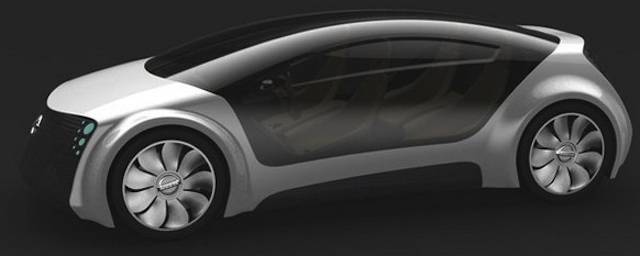
In that spirit, I have outlined some sketches that I've found as free domain on the web. The passenger vehicle that is shown on this page is similar to what I envision being used on Elon's Hyperloop, and while "tube/cylinder development" is not my main focus, I have thrown-out some tube and electrical sketches anyway, just to offer a visual perspective of what I believe will ultimately become, the "Hyperloop..."
That right there is the cruddy reality of our nation that ALL OF US have had to, at one point or another, learn to come to grips with. Once we have, however, things within our infrastructure really do start to take on a different appearance.
For this reason, Musk has made a proposition: why spend a projected $69-70 billion on an outdated rail that only tops-out at 116 miles per hour, when clearly the solution is to build something that's not a rail at all?!
So with the Hyperloop we eliminate a few factors that are sure to upset a few who are in Congress, but simultaneously it should bring a sigh of relief to the eskimos in Alaska, along with a few wealthy princes from Abu Dhabi.
Not that we're necessarily interested in helping-out a "few wealthy princes" from Dhabi, because God only knows that they have plenty of "help" from the massive, Ferrari theme park that they've built, but let's face it: no fossil fuels means no more punching holes into the earth.
On these key points, Elon Musk and I clearly agree with each other. However, we slightly disagree on one small factor, and that "factor" is not much more than vehicle type. To me, it doesn't seem like capsules are sufficient enough for a vacuum-based system that runs from downtown Los Angeles to San Francisco.
Friday, August 16, 2013
Elon Musk's "Hyperloop": The Cure For The Common Light Rail
It was only in 2003--just a few years back--that I felt like a white kid with a mullet upon a visit to Long Beach. In fact, many of my disabled friends from LA and myself would often go to King Taco on the corner of Long Beach and PCH, but there was something that that part of the city had that ours didn't at the time.
That "extra feature" was an electric train, something that Italian rednecks like myself had never before seen in the San Fernando Valley. Hell, come to think of it, there were a lot of things that we never got to see in the Valley, some of which included crossing gates.
This was a system that Long Beach's cable-fed "Blue Line" used, but then I was driven to ask a friend from South LA why our Valley suburb didn't have a rail system like that, but he assured me that it was undoubtedly in the Valley's future.
Well...some "future" our beloved San Fernando Valley had to look forward to: a half-assed "light rail" that was really just a two-lane roadway that had been retrofitted from a railroad track, one that ran along Victory during the War era. Back then it probably wasn't called, "Victory," but then the Valley has always been a tossed salad of industrial inconsistencies anyway, so who cares?!
The point that we care about for the sake of this discussion is America's "grid," the "infrastructure." With all sincerity intended, that "grid" is one that's simply silly. It's nonsensical to blow tax dollars on a hydrogen Hummer for Schwarzenegger, while gas continues to soar toward the 5-dollar-per-gallon mark.
It's nonsensical for In-Home Supportive Services to shell-out minimum wage toward a menial workforce, when clearly it's more cost-effective to make all efforts toward getting the developmentally-challenged up and working, and this is where the "Tesla touch" comes in to help bring public transit to a brand new plane of existence.
Elon Musk has just leaked a ground-breaking, mass transit model that will inevitably make super sonic travel into a near reality. It uses a strange breed of "space tech" like none that has ever been used in public transportation.
Now you'd say, "Sweet! But isn't that "kind of thing" only for the rich and eccentric? Yes, such is usually the case with such high-and-mighty forms of transport. The Musk vision, however, is one that sees a world where electromagnetic transport is something accessible to nearly anyone who wants it.
That seems to be the key to unlocking the door to Elon Musk and his electromagnetic know-how, and his DC motor technology is the kind that's going to benefit all of us.
Why? Because it would cost a tad over $6 billion dollars to build the "Hyperloop," a refreshing concept from Elon Musk that proposes to bring a new kind of high-speed rail to the West Coast. This, however, is not nearly as substantial as the proposed $69-70 billion that would be needed to build the Bay to LA train that the "Administration" wants to construct, one that would also eat up steel and other crude resources.
With the Hyperloop, on the other hand, the form of transit comes in the form of what Musk himself describes as a sort of "air hockey table," a reverse bear trap of magnetic poles and giant turbines. The turbines are the most important part of the Hyperloop, because they push and pull, while dropping the tunnel's overall air pressure. This, combined with magnetized mile marks for torque, make for an in-tunnel "flight" that's reminiscent of Star Tours.
What this boils-down to is that the Hyperloop is a transit system that uses simple technology that's more complicated then it sounds. What's not "simple" about using magnets and air pressure to propel a passenger craft?!
Elon Musk apparently agrees, and with the invention of Hyperloop transit, the electronics guru has strove to invent a new dimension of public transit. That's got to make you wonder then...
...Have we been doing things wrong this whole time? Aren't gas and oil the best solutions for essentially any type of vehicle? Nope! And whoever told you that "gas is good" probably spilled a little too much nail polish in their chocolate milk, because honestly, gas is booty!
Gas is a bunch of explosive crud that we dump into our cars to make them run, but let's face it: even if we hurt the natural realm a bit by making batteries, that process can not be as toxic as burning fossil fuels.
And I mean for real, how the frick do you expect someone on a fixed income to buy Amtrak tickets for $60-120 per head, if that's even what it costs now? It's cool, except that it's a diesel-generated passenger train that books 65-70 miles per hour, where Musk is proposing a capsule that books nearly the speed of sound. And this is with nothing but magnets and airflow, which makes me really feel stupid about the kind of transit we're accustomed to.
Some of Elon Musk's most recent concepts and endeavors have actually made me feel stupid about a lot of things, like using steam, diesel motors and other abracadabras of the motoring realm to get from LA to San Diego.
Why couldn't we have figured this all out years ago?! It's so easy to combine air force with electromagnets to create a sort of "wind tunnel," one that moves a vehicle along with minimal drag.
That's good news for all of the speed junkies in the world, but what really makes the deal is that Musk's proposed Hyperloop would offer a one-way rate of about $20. The idea in itself is wild, to say the very least, but again it's possible with a $6-7 billion construction cost.
Also, the fact that the system would consist of an above-ground tunnel that's pressure-controlled would make the project a far more organic build than California's proposed light rail, one that's been said to top out at less than 120 miles per hour, this being done in the same distance as Musk's proposed Hyperloop.
Will Hyperloop prove to be a system that actually works? Tell you what: try riding MTA from Warner Center to Northridge, even on a weekday schedule, and tell me if that works.
The truth of the matter is that it now costs $80 for a Metro monthly pass, where in 2004 it was about $50. It takes approximately 45-60 minutes to travel from Woodland Hills to the borderline that separates Northridge from Reseda, and anyone who knows the area well enough knows that this is really not that much of a stretch.
So do we want Hyperloop transportation to become part of our daily landscape? Right about now, it sure is looking a lot nicer than conventional railroad, for sure!
That "extra feature" was an electric train, something that Italian rednecks like myself had never before seen in the San Fernando Valley. Hell, come to think of it, there were a lot of things that we never got to see in the Valley, some of which included crossing gates.
This was a system that Long Beach's cable-fed "Blue Line" used, but then I was driven to ask a friend from South LA why our Valley suburb didn't have a rail system like that, but he assured me that it was undoubtedly in the Valley's future.
Well...some "future" our beloved San Fernando Valley had to look forward to: a half-assed "light rail" that was really just a two-lane roadway that had been retrofitted from a railroad track, one that ran along Victory during the War era. Back then it probably wasn't called, "Victory," but then the Valley has always been a tossed salad of industrial inconsistencies anyway, so who cares?!
The point that we care about for the sake of this discussion is America's "grid," the "infrastructure." With all sincerity intended, that "grid" is one that's simply silly. It's nonsensical to blow tax dollars on a hydrogen Hummer for Schwarzenegger, while gas continues to soar toward the 5-dollar-per-gallon mark.
It's nonsensical for In-Home Supportive Services to shell-out minimum wage toward a menial workforce, when clearly it's more cost-effective to make all efforts toward getting the developmentally-challenged up and working, and this is where the "Tesla touch" comes in to help bring public transit to a brand new plane of existence.
Elon Musk has just leaked a ground-breaking, mass transit model that will inevitably make super sonic travel into a near reality. It uses a strange breed of "space tech" like none that has ever been used in public transportation.
Now you'd say, "Sweet! But isn't that "kind of thing" only for the rich and eccentric? Yes, such is usually the case with such high-and-mighty forms of transport. The Musk vision, however, is one that sees a world where electromagnetic transport is something accessible to nearly anyone who wants it.
That seems to be the key to unlocking the door to Elon Musk and his electromagnetic know-how, and his DC motor technology is the kind that's going to benefit all of us.
Why? Because it would cost a tad over $6 billion dollars to build the "Hyperloop," a refreshing concept from Elon Musk that proposes to bring a new kind of high-speed rail to the West Coast. This, however, is not nearly as substantial as the proposed $69-70 billion that would be needed to build the Bay to LA train that the "Administration" wants to construct, one that would also eat up steel and other crude resources.
With the Hyperloop, on the other hand, the form of transit comes in the form of what Musk himself describes as a sort of "air hockey table," a reverse bear trap of magnetic poles and giant turbines. The turbines are the most important part of the Hyperloop, because they push and pull, while dropping the tunnel's overall air pressure. This, combined with magnetized mile marks for torque, make for an in-tunnel "flight" that's reminiscent of Star Tours.
What this boils-down to is that the Hyperloop is a transit system that uses simple technology that's more complicated then it sounds. What's not "simple" about using magnets and air pressure to propel a passenger craft?!
Elon Musk apparently agrees, and with the invention of Hyperloop transit, the electronics guru has strove to invent a new dimension of public transit. That's got to make you wonder then...
...Have we been doing things wrong this whole time? Aren't gas and oil the best solutions for essentially any type of vehicle? Nope! And whoever told you that "gas is good" probably spilled a little too much nail polish in their chocolate milk, because honestly, gas is booty!
Gas is a bunch of explosive crud that we dump into our cars to make them run, but let's face it: even if we hurt the natural realm a bit by making batteries, that process can not be as toxic as burning fossil fuels.
And I mean for real, how the frick do you expect someone on a fixed income to buy Amtrak tickets for $60-120 per head, if that's even what it costs now? It's cool, except that it's a diesel-generated passenger train that books 65-70 miles per hour, where Musk is proposing a capsule that books nearly the speed of sound. And this is with nothing but magnets and airflow, which makes me really feel stupid about the kind of transit we're accustomed to.
Some of Elon Musk's most recent concepts and endeavors have actually made me feel stupid about a lot of things, like using steam, diesel motors and other abracadabras of the motoring realm to get from LA to San Diego.
Why couldn't we have figured this all out years ago?! It's so easy to combine air force with electromagnets to create a sort of "wind tunnel," one that moves a vehicle along with minimal drag.
That's good news for all of the speed junkies in the world, but what really makes the deal is that Musk's proposed Hyperloop would offer a one-way rate of about $20. The idea in itself is wild, to say the very least, but again it's possible with a $6-7 billion construction cost.
Also, the fact that the system would consist of an above-ground tunnel that's pressure-controlled would make the project a far more organic build than California's proposed light rail, one that's been said to top out at less than 120 miles per hour, this being done in the same distance as Musk's proposed Hyperloop.
Will Hyperloop prove to be a system that actually works? Tell you what: try riding MTA from Warner Center to Northridge, even on a weekday schedule, and tell me if that works.
The truth of the matter is that it now costs $80 for a Metro monthly pass, where in 2004 it was about $50. It takes approximately 45-60 minutes to travel from Woodland Hills to the borderline that separates Northridge from Reseda, and anyone who knows the area well enough knows that this is really not that much of a stretch.
So do we want Hyperloop transportation to become part of our daily landscape? Right about now, it sure is looking a lot nicer than conventional railroad, for sure!
Subscribe to:
Posts (Atom)